Why 5-Star Reviews Alone Aren’t Winning You Local Leads Anymore
Why 5-Star Reviews Alone Aren’t Winning You Local Leads Anymore (and What Actually Does)
For years, the formula for dominating the local market seemed simple: provide a good service, ask for a 5-star review, and watch your business climb to the top of the Google Map Pack. If you hit that coveted 4.8 or 4.9 average, you were the king of your neighborhood. But lately, something has changed. You might have noticed a competitor with only 20 reviews outranking your profile with 200. Or perhaps your ranking has “tanked” despite a steady stream of glowing feedback.
As a specialist in google business profile seo, I, Shahid Anwar, have seen this frustration firsthand across hundreds of accounts. The reality is that we have entered a new era of local search. In 2026, the “Review Myth” is officially dead. While having a high rating is a baseline requirement – the “social proof” that convinces a human to click – it is no longer the primary engine that convinces Google’s algorithm to rank you. If you are still chasing stars while ignoring activity signals, you are essentially trying to win a Formula 1 race with a horse and carriage.
The Death of the Static Google Business Profile SEO
Google’s algorithm has undergone a massive transformation. We have moved from the “Set It and Forget It” era to the “Dynamic Profile” era. In the past, you could optimize your description, add a few photos, get some reviews, and stay at the top for months. Following the March 2026 Core Update, Google has intensified its crackdown on static, keyword-stuffed listings that don’t show real-world engagement.
Google now prioritizes “Active Signals.” A profile that isn’t updated, doesn’t receive fresh interaction, or lacks real-time data is viewed as “stale.” This update was specifically designed to filter out businesses that were gaming the system through bulk citations and fake reviews. To truly master google business profile seo, you must treat your listing like a social media feed rather than a yellow pages ad. Google wants to see that your business is a living, breathing entity in the local community.
The “Dynamic Profile” requires constant feeds of data: new photos, updated “From the Business” sections, and frequent Q&A interactions. If your profile looks exactly the same today as it did six months ago, Google’s AI assumes your business might not be as relevant or operational as a competitor who is posting weekly updates and responding to every query within minutes.
Why Your Competitor With 20 Reviews is Beating Your 200 Reviews
This is the most common question I receive: “Shahid, I have ten times the reviews of the guy at #1. Why am I at #5?” The answer lies in two critical concepts: Review Velocity and Review Sentiment Relevance.
Review Volume (your total count) is a legacy metric. Review Velocity – the speed and consistency at which you acquire new reviews – is the modern ranking factor. If you earned 150 reviews in 2023 but only 5 in the last six months, Google perceives your business as declining in popularity. Meanwhile, a new competitor getting 3 high-quality reviews every week has a higher velocity, signaling to Google that they are the current “hot spot” in town. You can learn more about this phenomenon in our guide on Why Your Competitor With Fewer Reviews Still Outranks You in the 3-Pack.
Furthermore, Google’s Natural Language Processing (NLP) now reads the content of the reviews to determine relevance. A 5-star review that just says “Great!” is worth almost nothing for SEO. However, a review that says, “The best emergency plumber in Austin; they fixed my burst pipe in an hour,” is gold. These are “Keyword-Rich Reviews.” Google uses these to verify that you actually provide the services you claim to offer. If your competitor has 20 reviews that specifically mention your target keywords and you have 200 “Great service!” reviews, the competitor wins on relevance every time.
The “Big Three” Reimagined: Proximity, Relevance, and Prominence in 2026
To rank google business profile listings effectively today, we have to look at how the classic pillars of Local SEO have been reimagined by AI. The old rules of proximity, relevance, and prominence still exist, but they are interpreted through a much more complex lens.
Proximity: The Proximity Tank
Proximity used to be the strongest signal. If you were the closest shop to the searcher, you ranked. But in 2026, we are seeing the “Proximity Tank.” Google has realized that the closest business isn’t always the best. If a user is willing to drive five extra minutes to a better-rated or more active shop, Google will show that shop instead. This is why Why Being the Closest Shop Still Won’t Guarantee a Top Spot is essential reading for modern business owners. You can no longer rely on your physical address alone; you must earn your way into the searcher’s radius through prominence.
Relevance: Conversational Proximity
Relevance is no longer about how many times you put “HVAC repair” in your description. It’s about “Conversational Proximity” – how well your profile answers the specific, often long-tail, intent of the user. Google’s AI-driven filters interpret your service menu, your updates, and even the captions on your geo-tagged photos to see if you match the user’s exact need. Utilizing local seo tools can help you identify which conversational keywords your competitors are successfully targeting.
Prominence: Beyond the Map
Prominence is your digital footprint outside of Google. In the 2026 landscape, Google looks for “Spatial Trust.” This includes local backlinks from neighborhood blogs, mentions in local news, and even your activity on platforms like Nextdoor. If the rest of the local web isn’t talking about you, Google won’t give you prominence in the Map Pack, regardless of your star rating.
The New “Hidden” Signals: Activity, Interaction, and Physical Proof
This is the technical core of modern google business profile seo. Google has moved beyond what you *say* about your business to what it can *prove* about your business using real-world data. These “Hidden Signals” are now the primary drivers of the 3-Pack.
- The “Active Stay” Signal (Dwell Time): Google tracks how long a user’s phone stays at your physical location. If people are clicking “Directions,” arriving at your shop, and staying for 45 minutes, Google receives a massive “Physical Proof” signal that your business is legitimate and popular.
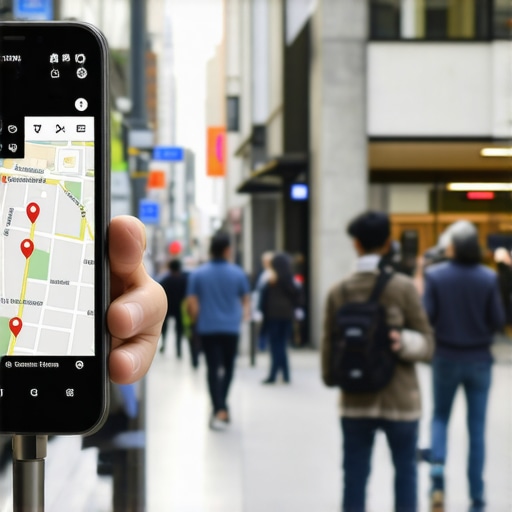
- Driving Directions: This is a massive gmb ranking service secret. The ratio of people who search for you versus the people who actually click the “Directions” or “Call” button is a key performance metric. High intent-to-visit signals tell Google you are a high-authority destination.
- Check-In Signals: When customers with Google accounts have their location history on, Google pings their presence at your coordinates. You should Stop Ignoring the ‘Check-In’ Signal because it is one of the few signals that is nearly impossible to fake with local seo software.
- Response Time: In 2026, if you have the “Chat” feature enabled but take 4 hours to reply, your ranking will suffer. Google’s algorithm rewards businesses that provide immediate utility. Replying in under 5 minutes is now a competitive ranking factor.
- Bluetooth Beacons and Spatial Trust: Google uses anonymized data from Bluetooth and Wi-Fi signals to verify foot traffic. This prevents “ghost kitchens” or “fake offices” from outranking real, local brick-and-mortar establishments.
By focusing on these interaction signals, you create a “feedback loop” of authority that a static 5-star profile simply cannot compete with. This is how you improve google maps ranking in a saturated market.
Actionable Strategy: Moving Beyond the Stars for Google Business Profile SEO
If you want to rank higher on google maps and increase google business profile visibility, you need a shift in strategy. Follow this 2026 checklist to move beyond the “Review Myth”:
- Audit Your Profile Weekly: Use a professional google business profile audit tool to check for keyword gaps. Ensure your primary and secondary categories are perfectly aligned with your actual revenue-generating services.
- Implement a Local Content Strategy: Don’t just post “We are open.” Post about local events you are sponsoring, share geo-tagged photos of your team working in specific neighborhoods, and create “City Pages” on your website that link back to your profile.
- Optimize for “Active Stay”: Give customers a reason to engage with your profile while they are at your location. Perhaps a digital coupon accessible via a QR code that leads to your GMB “Updates” section. This increases dwell time and interaction pings.
- Leverage GMB SEO Tools: Use a google maps rank tracker to see how your visibility changes block-by-block. Local SEO is a game of inches; you need to know exactly where your signal drops off to target your local backlink efforts.
- Focus on Review Quality over Quantity: When asking for reviews, prompt customers to mention the specific service and the neighborhood. “Could you mention we did your roof repair in North Austin?” This builds the conversational relevance Google craves.
If you are struggling to see results, it might be time to look into a professional google maps ranking service. Professional optimization ensures that all these technical “hidden” signals are being fired correctly and consistently.
Why Real-Time Activity Fixes a Sinking Ranking
If your rankings have recently “tanked,” it’s likely because of a “Proximity Tank” or a lack of real-time activity. Many agencies will tell you to buy more citations. They are wrong. In 2026, citations are a baseline, not a fix. To fix a sinking ranking, you need to prove to Google that people are interacting with you right now.
I often tell my clients that Why Real-Time Store Activity Fixes a Sinking GMB Maps Ranking Faster Than Citations is the most important lesson in modern SEO. By driving fresh “Directions” requests, increasing message response rates, and uploading daily “Live” photos, you can often recover a ranking in weeks, whereas building citations could take months to show any movement. This is the core of google business profile optimization.
Furthermore, you must address the 7 Maps SEO Fundamentals to Fix Your 2026 Proximity Tank. This includes cleaning up “ghost” listings and ensuring your primary category hasn’t been diluted by too many secondary categories that don’t reflect your core business.
Conclusion: Dominating the 2026 Local Landscape
The days of winning the Google Map Pack by simply being a “5-star business” are over. While reviews remain the “social proof” that converts a searcher into a lead, they are only the 6th most influential factor in Google’s current ranking algorithm. To get more calls from google maps and truly dominate your local area, you must master the art of the Dynamic Profile.
You need google maps seo that accounts for review velocity, keyword-rich sentiment, and physical interaction signals like dwell time and driving directions. Stop chasing stars and start building a profile that reflects the real-world activity of your business.
If you’re ready to stop guessing and start growing, it’s time to leverage professional local seo services. Whether you need a comprehensive audit or a dedicated local seo agency to manage your “Active Signals,” the goal is the same: turning your Google Business Profile into a google maps lead generation machine. For those who want to take the DIY route, I highly recommend exploring SEO Viper Tools to track your progress and stay ahead of the competition. Let’s move beyond the stars and start winning the leads you deserve.