The Truth About Affordable SEO and Why It Usually Fails to Fix Map Rank
The Truth About Affordable SEO and Why It Usually Fails to Fix Map Rank
You’ve seen the offers. They land in your inbox daily: “Rank #1 on Google Maps for just $199 a month!” or “Guaranteed 3-pack placement with our affordable local SEO services.” For a small business owner struggling to get the phone to ring, these offers look like a lifeline. But six months later, you’re $1,200 in the hole, and your business is still buried on page four of the map results. Your google business profile seo hasn’t budged, and the agency is sending you “monthly reports” filled with green arrows that don’t translate into actual customers.
The truth is, most “affordable” SEO packages are designed to sell, not to rank. They are built on a foundation of outdated tactics that Google’s sophisticated 2026 algorithm now ignores – or worse, penalizes. If you want to rank google business profile listings in a competitive market, you have to understand that Google Search and Google Maps are two entirely different animals. While a cheap agency might tweak a few keywords on your website, they are often completely blind to the interaction signals and physical evidence Google now requires to grant you a spot in the coveted 3-pack. In this guide, we’re going to pull back the curtain on why low-cost SEO is the most expensive mistake you can make and what it actually takes to dominate your local market today.
The “Cheap SEO” Disconnect: Why $200/Month Won’t Buy a 3-Pack Spot
To understand why cheap SEO fails, you have to understand the economics of the agency providing it. If an agency charges $200 or $300 a month, they cannot afford to have a senior strategist like myself looking at your account. Instead, they rely on “process-driven” automation. This usually manifests as a “citation building service” where they pay a fulfillment center in a lower-cost region to create 100+ directory listings on sites no human has visited since 2012.
The problem? Most of these directories are useless. As we’ve discussed in our deep dive into 7 Citations That Actually Move Your Rank and 100 That Are a Total Waste of Time, Google has largely devalued generic directory links. In 2026, the algorithm is looking for relevance and prominence, not just a volume of mentions on “YellowPages-clone” websites. Cheap agencies use these because they are easy to report. They can show you a list of 100 links and say, “Look at all the work we did!” but none of those links have the authority to move your map pin a single inch.
Furthermore, these low-cost packages lack the sophisticated tools necessary to diagnose real issues. Without a high-level google business profile audit tool, these agencies miss critical data gaps – like inconsistent categories, ghosted profiles, or “Map Pin Drift” – that keep your business hidden. They are playing a game of checkers while the local map pack seo landscape has turned into 4D chess. When you pay for “affordable” SEO, you aren’t paying for results; you’re paying for the illusion of activity.
Search vs. Maps: Why Your Google Business Profile SEO Requires a Different Playbook
One of the biggest reasons “affordable” agencies fail is that they treat Google Maps like a subset of traditional web search. They apply the same “keyword density” and “backlink” logic to your Google Business Profile (GBP) that they would to a blog post. This is a fundamental misunderstanding of How the Local SEO Algorithm Decides Which Business Gets the Top Spot Today.
Google Search asks: “Which website is the most authoritative answer to this question?”
Google Maps asks: “Which business is the most trusted, relevant, and physically present solution for this user right now?”
Traditional SEO focuses on content and links. Maps SEO focuses on interaction signals and human behavior. Research from industry leaders like Jumper Media highlights that Google is increasingly prioritizing how users interact with your profile over what is written on your website. Are people clicking “Call”? Are they requesting driving directions? Are they hovering over your photos? These are the “popularity signals” that a $200/month agency simply cannot influence through automated directory submissions.
Recent insights from the SEO community on Reddit have shown that service-area businesses (SABs) are dropping in and out of the map pack even when their reviews and proximity are stable. Why? Because they lack “real-world interaction.” If Google doesn’t see people engaging with your brand in the physical world or through mobile intent, it assumes you are less relevant than the competitor down the street who is getting daily direction requests. To improve google maps ranking, you need a strategy that goes beyond meta tags and touches the way humans interact with your business.
The 2026 Shift: How to Rank Google Business Profile Listings Using Physical Evidence
As we move through 2026, the local algorithm has evolved beyond the classic trio of Proximity, Relevance, and Prominence. We are now entering the era of “Physical Evidence.” Google is no longer just taking your word for it that you’re a real business located at 123 Main St. They are using store pings, AR (Augmented Reality) signals, and Bluetooth beacons to verify business activity.
In our analysis of Local SEO Trends 2026 and the Shift Toward Physical Proximity Signals, we’ve observed that Google is leveraging the massive amount of data from Android and iOS devices to determine “dwell time.” If a customer’s phone stays at your location for 45 minutes, Google knows they likely made a purchase or received a service. This “physical backlink” is worth more than a thousand directory listings.
To rank google business profile assets in this environment, you need to prove your “Prominence” through real-world data. This is why “cheap” SEO fails; it can’t simulate or encourage the type of real-world activity Google now demands. High-end local seo tools are now focusing on tracking these granular signals. If your agency isn’t talking to you about how to increase your “driving direction request” rate or how to use local check-ins to boost your proximity radius, they are living in 2018. They might be able to help you rank higher on google maps for a very specific, low-competition keyword, but they won’t help you dominate the high-traffic terms that actually pay the bills.
Why Your “Optimized” Profile is Still Stuck on Page 4
I often hear from business owners who say, “I’ve done everything right. I have 100 five-star reviews, my NAP (Name, Address, Phone) is consistent, and I post every week. Why am I still not in the 3-pack?” The answer usually lies in the nuances that “affordable” services ignore.
Consider the “Review Myth.” Many businesses focus solely on the quantity of reviews. However, as we explore in Why Your Competitor With Fewer Reviews Still Outranks You in the 3-Pack, Google’s AI filters are now looking for “semantic relevance” within those reviews. A five-star review that says “Great job!” is nearly worthless compared to a review that says, “The best emergency plumber in Chicago; they fixed my burst pipe in 20 minutes.” The latter contains location and service keywords that Google uses to verify your relevance.
Then there is the issue of visual data. Most cheap local seo services ignore your photos. Yet, there is a hidden link between profile photo recency and incoming customer calls. Google uses “Cloud Vision AI” to scan your uploaded images. If your photos are blurry, generic stock images, or haven’t been updated in two years, Google perceives your business as stagnant. Worse, if your pin has “Map Pin Drift” – where your physical location doesn’t perfectly align with where Google thinks you are – your visibility will be throttled. You might find that Your Shop Pin Only Shows Up When You’re Standing in the Parking Lot. Solving these technical hurdles requires expert-level google maps seo tools that can visualize your ranking on a hyperlocal grid, rather than just giving you a single “average” rank.
The Expert Roadmap: Leveraging a Google Maps Ranking Service That Works
If you’re tired of the “cheap SEO” hamster wheel, it’s time to pivot to a strategy that actually moves the needle. A professional google maps ranking service doesn’t just check boxes; it builds a digital moat around your business. Here is the roadmap we use to achieve 3-pack dominance:
- Fixing Map Pin Drift & Proximity Issues: We ensure your physical coordinates are perfectly synced across Google’s internal databases. This expands your “ranking radius” so you show up for users miles away, not just those next door.
- Interaction Signal Engineering: We focus on increasing the “Click-to-Call” and “Request Directions” metrics. This involves optimizing your profile not just for bots, but for human conversion.
- Hyperlocal Content Strategy: Instead of generic blog posts, we create content that connects your business to specific neighborhoods. Google needs to see that you are an authority in *your* specific part of town.
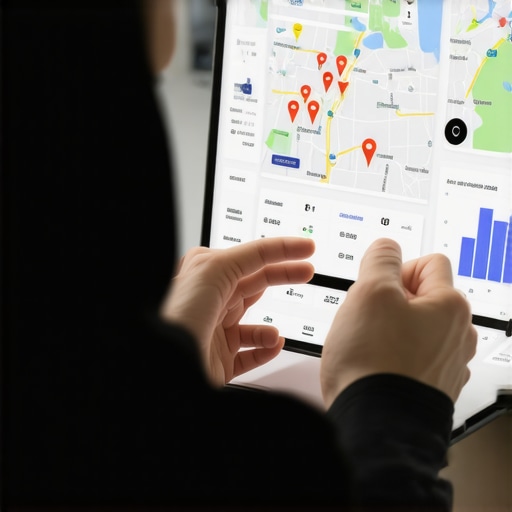
- Grid-Based Tracking: Stop looking at one-dimensional reports. Use a google maps rank tracker to see exactly where your visibility drops off. If you rank #1 at your front door but #10 two blocks away, you have a proximity gap that needs to be addressed with localized signals.
- Visual Recency: We implement a system for high-quality, geo-tagged photo updates that prove to Google’s AI that your business is active and open.
By Mastering Local Map Pack Service: Boost Your Google 3 Pack Results, you stop guessing and start growing. This isn’t about “tricking” the algorithm; it’s about providing Google with the data it needs to feel confident in recommending you to its users. When Google recommends a business, its own reputation is on the line. Our job is to make you the safest, most obvious choice for the algorithm.
Conclusion: Moving Beyond “Cheap” to “Effective”
At the end of the day, local SEO is an investment in lead generation, not a monthly maintenance fee. If you are paying for “affordable” services that don’t result in more phone calls, those services are actually costing you more than a premium agency ever would. You aren’t just losing the monthly fee; you’re losing the lifetime value of the customers who are currently calling your competitors.
In the world of google business profile seo, you get what you pay for. The “cheap” route is a dead end of automated citations and generic advice. The “effective” route involves a deep understanding of interaction signals, physical evidence, and the 2026 algorithm shifts. It’s time to stop settling for page four visibility. Use professional SEO Viper Tools to audit your current standing, find the real gaps in your visibility, and start building a map presence that actually drives revenue. The 3-pack is waiting – will you be there, or will your competitor?