How the Local SEO Algorithm Decides Which Business Gets the Top Spot Today
How the Local SEO Algorithm Decides Which Business Gets the Top Spot Today
The landscape of local search has shifted beneath our feet. If you are still operating on the local SEO playbook from 2022, you aren’t just behind – you are invisible. For years, the recipe for success in the Google 3-Pack was relatively simple: claim your profile, sprinkle in some keywords, and chase a handful of five-star reviews. But as we move through 2026, the “old” way of local SEO is dying, replaced by a sophisticated, AI-driven machine that prioritizes real-world behavior over digital window dressing.
I’m Kevin Pauls, a Local SEO Consultant and Google Business Profile Product Expert. I’ve spent years deconstructing the nuances of how Google connects users with local services. What we are seeing today is a fundamental pivot. Visibility no longer depends solely on “rankings” in the traditional sense; it depends on recognition. Google is no longer just looking at what you say about yourself; it is looking at the digital and physical footprint your business leaves across the entire web. To dominate the map pack now, you must understand the shift from simple optimization to “entity clarity.”
Recent industry data indicates that visibility now hinges on a complex web of authority, citations, and how clearly Google perceives your business as a distinct, trustworthy entity. If you want to stay ahead, you need to follow Your Blueprint to Local Map Pack Domination in 2025 and beyond, adapting to an algorithm that values physical truth over SEO tricks.
Section 2: The Three Pillars: Proximity, Relevance, and Prominence
Despite the advancements in AI, the core of the local algorithm remains anchored to three foundational pillars: Proximity, Relevance, and Prominence. However, the way Google calculates these factors has become infinitely more nuanced.
Relevance: Beyond Keywords
Relevance is the measure of how well a local business profile matches a user’s search intent. In the past, this was achieved by stuffing your description with keywords. Today, relevance is driven by google business profile optimization that focuses on category precision and attribute depth. Google’s AI now reads your menu, your services, and even the text within your uploaded photos to determine if you truly offer what the user is looking for. Choosing the right primary category is still the single most important lever, but the secondary categories now act as vital context clues that define your “signal-fit.”
Proximity: The Fluid Boundary
Proximity remains the most difficult factor to “game” because it is tied to the user’s physical location. It is often the “unbeatable” factor in high-density areas. However, in 2026, proximity is becoming more fluid. Google is increasingly weighing “service area” signals and where your customers are actually coming from. If you are a plumber based in a suburb but 80% of your google business profile seo signals (like driving directions and check-ins) originate from the city center, Google may extend your reach into that urban core, overriding pure geographic distance.
Prominence: Your Digital Gravitas
Prominence is Google’s way of asking, “How important is this business in the real world?” This is calculated using information that Google has about a business from across the web, such as links, articles, and directories. This is where Why Being the Closest Shop Still Won’t Guarantee a Top Spot on Google Maps becomes clear. A business that is two miles further away but has massive brand mentions, high-quality local backlinks, and a consistent presence on authoritative directories will often outrank the “mom and pop” shop next door to the user. Google determines local ranking based on these three factors working in tandem, creating a weighted score that changes in real-time.
Section 3: The “Signal-Fit” Revolution
One of the most significant breakthroughs in our understanding of the algorithm comes from a massive study of 8.7 million Google Business Profiles. The data is conclusive: Google is no longer applying a one-size-fits-all ranking logic to every business. Instead, we have entered the era of “Signal-Fit.”
Signal-fit means that Google looks for industry-specific markers to validate a business’s quality. The local seo ranking factors for a personal injury lawyer are drastically different from those for a sourdough bakery. For a lawyer, Google prioritizes “Experience, Expertise, Authoritativeness, and Trustworthiness” (E-E-A-T) through professional citations and detailed case-result posts. For a restaurant, the algorithm leans heavily on “freshness” signals – new photos, frequent review velocity, and mentions of specific dishes in user-generated content.
If you are using a generic gmb ranking service, you are likely failing because you aren’t feeding the algorithm the specific signals it craves for your niche. A plumber needs to demonstrate “emergency response” signals, such as high interaction rates during off-hours, while a boutique hotel needs high-resolution visual content and “dwell time” data. Understanding your specific industry’s signal-fit is the difference between page one and page ten. This is exactly How Small Agencies Miss the Most Important Data Point in Local SEO Reporting; they focus on total traffic rather than the quality of industry-specific conversion signals.
Section 4: Behavioral & Physical Interaction Signals
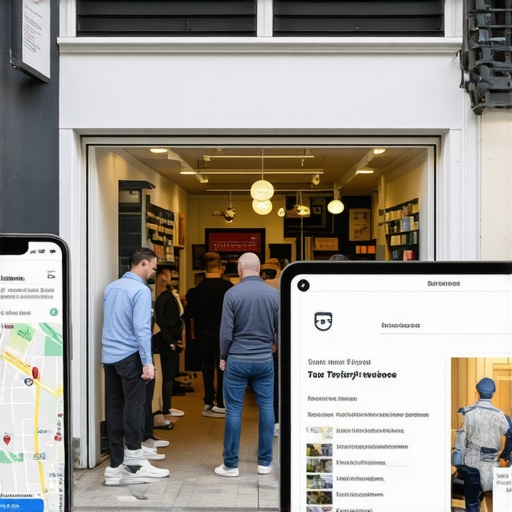
In 2026, the “Local SEO” battle has moved off the screen and into the physical world. Google is increasingly using anonymized mobile device data to verify the legitimacy and popularity of a business. These behavioral signals are now among the heaviest weights in the ranking algorithm.
The Power of “Pings” and Dwell Time
Google knows when a mobile device enters your store. These “pings” serve as a real-world vote of confidence. If Google sees that 500 people per week spend an average of 45 minutes at your location (dwell time), it infers that your business is a prominent and relevant destination. This is why a business with fewer reviews but higher foot traffic can often improve google maps ranking over a competitor with a “perfect” digital profile but a ghost-town physical location.
Driving Direction Requests
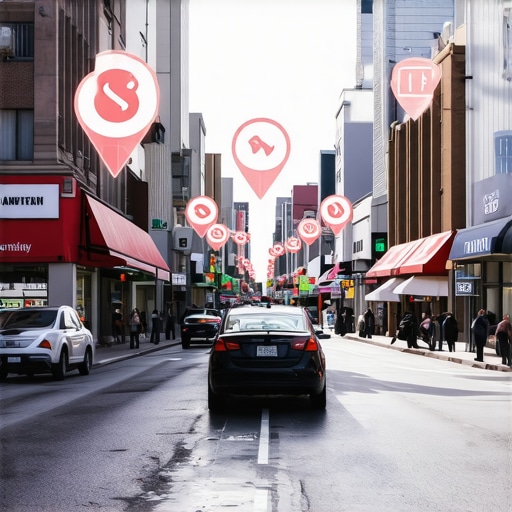
One of the most potent signals you can generate is a “Driving Direction” request. When a user searches for your business and then clicks “Directions,” it tells Google that the user intent was successfully satisfied. This is a high-intent signal that carries more weight than a simple website click. We have documented The Hidden Impact of Driving Direction Requests on Local Search Rank, showing a direct correlation between direction request volume and Map Pack ascension. To rank in google map pack today, you must encourage these physical interactions.
The Role of Augmented Reality (AR)
With the integration of Live View and AR in Google Maps, the algorithm now values businesses that provide “visual proof” of existence. High-resolution, 360-degree photos and AR-ready storefront images help Google’s “Visual Search” AI confirm that your business is exactly where you say it is. Using local seo tools to monitor how these visual assets are indexed is no longer optional – it is a core requirement for maintaining trust with the algorithm.
Section 5: The AI Filter and Spam Prevention
The updates of late 2025 and early 2026 have introduced the most aggressive spam filters in Google’s history. The goal is simple: eliminate “ghost” locations and fake engagement. The AI Filter now scrutinizes every review and every photo with surgical precision.
Combatting Fake Reviews
Google’s AI can now detect patterns in review sentiment and metadata that human moderators would miss. If a business receives twenty reviews in a single hour from accounts that have no physical history of being near the business location, those reviews are flagged or purged. Furthermore, Google has shifted toward “Recognition” over “Rankings.” It cross-references your reviews with mentions of your business on social media and local news sites. If the “buzz” only exists on your GBP profile and nowhere else on the web, the AI views it as a manipulation attempt.
Physical Evidence and Street View Consistency
To prevent the rise of “lead gen” sites posing as local businesses, Google now requires “physical evidence.” This includes high-resolution store photos that match Google’s own Street View data. If your profile shows a grand office building but Street View shows a residential house or a vacant lot, you are at high risk for a suspension. For those struggling with these issues, understanding the 4 Fixes for Google 3-Pack Results After the 2026 AI Filter Update is essential to recovering lost visibility and ensuring your entity clarity remains intact.
Section 6: Tactical Checklist for 2026
To stay competitive, you need a proactive strategy that addresses both the digital and physical requirements of the modern algorithm. Use this checklist to audit your current efforts:
- Leverage Review Nicknames: Google Maps now allows users to post reviews with nicknames instead of real names. Encourage your customers to use this feature if they are privacy-conscious, as it increases the volume of authentic feedback.
- Update Attributes Weekly: Google frequently adds new industry-specific attributes (e.g., “AI-powered consultations” or “EV charging available”). Keeping these updated signals to the algorithm that your business is active.
- Post High-Res Photos: Upload at least 3-5 new photos per week. Focus on the exterior, interior, and your team in action to provide “physical evidence” for the AI filter.
- Monitor Behavioral Data: Use a google maps rank tracker that doesn’t just show positions, but also tracks direction requests and “call” clicks.
- Optimize for Visual Search: Ensure your storefront is clearly visible and matches your google maps optimization efforts.
- Respond with Context: When responding to reviews, use “nicknames” or mention specific services to reinforce relevance without keyword stuffing.
Section 7: Conclusion & CTA
Local SEO is no longer a “set it and forget it” task. The 2026 algorithm is a living, breathing entity that values real-world behavior, industry-specific signal-fit, and physical transparency. To win the top spot, you need more than just a optimized profile; you need a strategy that proves your business is a prominent, recognized pillar of your local community.
If your rankings have stalled or you’ve been hit by the recent AI filter updates, don’t leave your visibility to chance. It requires a google maps ranking service that understands behavioral signals and the deep mechanics of entity recognition. Contact Us today for a comprehensive audit or a consultation with Kevin Pauls, and let’s secure your spot at the top of the Map Pack.