
Why Your Shop Pin Only Shows Up When You’re Standing in the Parking Lot
Why Your Shop Pin Only Shows Up When You’re Standing in the Parking Lot
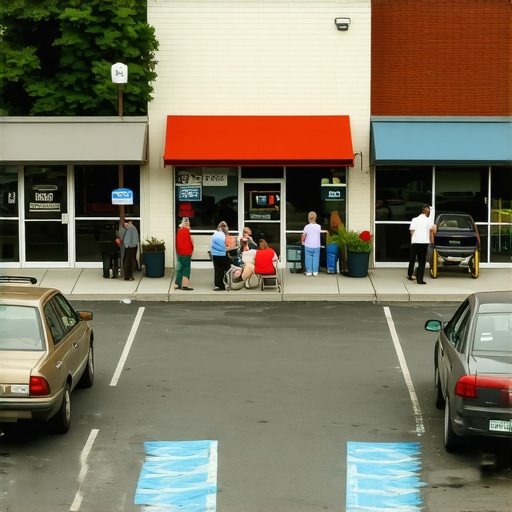
You’re sitting at your desk, sipping a coffee, and you decide to check your rankings. You type your primary service into Google, and there you are – Number 1 in the local 3-pack. You feel a surge of pride. But then, you head out for lunch. You’re only three blocks away, maybe half a mile at most, and you search again. This time, your business is nowhere to be found. You’ve been replaced by a competitor who has half your reviews and a website that looks like it was designed in 2005.
Welcome to “Parking Lot Syndrome.” As a specialist in google business profile seo, I see this every single day. It is the single most frustrating phenomenon for local business owners. You have the reviews, you have the years in business, and you have the physical location, yet your visibility is restricted to a tiny radius around your front door. This is the “Proximity Filter” in action, and if you don’t understand how to break it, you are effectively invisible to 90% of your potential local customers.
The Three Pillars: Why Distance is Currently Killing Your Visibility
To understand why your pin is ghosting everyone outside your parking lot, we have to look at the Google Local Algorithm. Google balances three specific pillars to determine who shows up in the Map Pack: Relevance, Distance (Proximity), and Prominence.
In the early days of local search, Relevance and Prominence could easily override Distance. If you were the best pizza shop in town, Google would show you to someone five miles away. However, as mobile usage exploded, Google shifted the weight heavily toward Distance. They want to provide the most “convenient” result. If you are standing in a parking lot, you are the most convenient result for yourself. But the moment you move away, your “Prominence” isn’t high enough to overcome the “Distance” of a closer, albeit inferior, competitor.
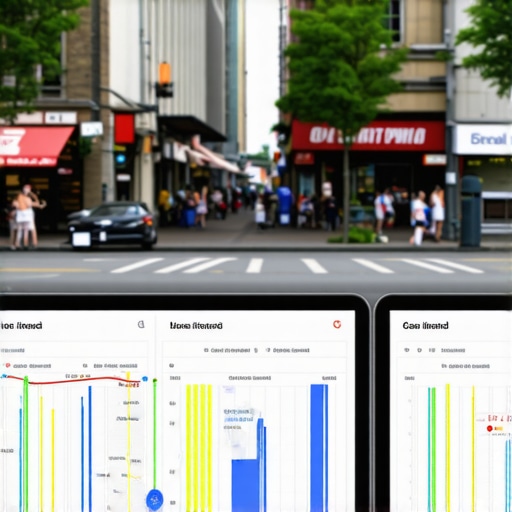
This creates what I call the “proximity trap.” Many businesses have decent relevance (they do what the user searched for) but zero prominence. When your prominence is low, Google defaults to the shortest physical distance. To see exactly how tight your ranking radius is, I recommend using a google business profile audit tool from SEO Viper Tools. These tools allow you to see a grid-based view of your rankings. If you see green “1s” at your shop location and red “20s” just two blocks away, you are suffering from a lack of local authority.
The hard truth is that Google doesn’t trust your business enough to recommend it to someone who has to drive an extra three minutes to get to you. To expand that radius, we have to move beyond basic optimization and start building what I call “Geographic Authority.”
The 2026 Shift: Moving Beyond “Near Me” to “Activity-Based” Ranking
As we look toward 2026, the landscape of google business profile seo is undergoing a massive transformation. The old ways of “optimizing” (stuffing keywords into your description) are dead. Google is moving toward a model based on physical interaction signals and real-world behavior. We are moving from “Near Me” to “Activity-Based” ranking.
Google is increasingly using “Real-Time Store Pings” and “Bluetooth Beacons” to verify the legitimacy of a business. It’s no longer just about who has the best website; it’s about whose physical location is actually being visited. Google tracks the location history of millions of users. If they see that 50 people a day enter your competitor’s shop and stay for 20 minutes, but only 5 people enter yours, Google’s AI concludes that the competitor is more “prominent” and “useful” to the community. This is a primary factor in Local SEO Trends 2026 and the Shift Toward Physical Proximity Signals.
In 2026, Google will also lean heavily on AR (Augmented Reality) signals. When users walk by with their phones, Google’s Visual Positioning System (VPS) identifies your storefront, your signage, and even the “vibe” of your business through user-contributed photos. If your digital presence doesn’t match the physical reality captured by these “pings,” your ranking radius will shrink to protect the user experience. You cannot fake “foot traffic,” and you cannot fake “dwell time.” These are the new gold standards of local search.
Why Traditional Citations Won’t Save Your Ranking Radius
I’m going to say something that might upset some “old school” SEOs: buying a package of 1,000 generic citations from a random freelancer will do absolutely nothing to expand your ranking radius in 2026. In fact, it might hurt you.
Years ago, having your Name, Address, and Phone Number (NAP) on every obscure directory on the internet was a ranking signal. Today, Google’s algorithm is much smarter. It knows that a link from a “Top 10 Directory” site that gets zero traffic is worthless. To rank google business profile effectively, you need niche-specific authority and local backlinks that actually generate clicks.
Prominence is built through local relevance. Does the local newspaper mention you? Does the neighborhood blog link to your latest community event? These are the signals that tell Google you are a pillar of the community, deserving of a wider ranking radius. I often tell my clients to use local ranking software like SEO Viper Tools to monitor which specific mentions are actually moving the needle. If you aren’t tracking the impact of your local PR, you’re just shouting into the void. Stop worrying about “Yellow Pages” and start worrying about your local Chamber of Commerce, neighborhood associations, and local event sponsorships. These provide the “Trust Signals” that allow you to outrank competitors who are physically closer to the searcher. For more on this, check out Why Your Competitor With Fewer Reviews Still Outranks You in the 3-Pack.
4 Practical Tactics to Break the Proximity Barrier
If you want to stop being a “parking lot hero” and start dominating your entire city, you need to implement these four aggressive tactics to improve your google business profile seo.
1. Hyperlocal Content and Geo-Tagging
Stop writing generic blog posts. If you are a plumber in Austin, don’t write “How to Fix a Leaky Faucet.” Write “How the Hard Water in the Mueller Neighborhood Affects Your Faucets.” Mention specific landmarks, intersections, and neighborhood names. When Google’s crawlers see these hyperlocal terms associated with your business, it strengthens the connection between your physical location and the surrounding areas. This is a core part of the 7 Maps SEO Fundamentals to Fix Your 2026 Proximity Tank.
2. Interaction Signals and High-Res Visuals
Google’s AI now scans your photos for “physical evidence” of your business. If your profile is full of blurry, low-resolution photos, or worse, stock images, you are killing your rank. You need high-resolution photos of your exterior signage, your interior layout, and your team in action. Encourage customers to post photos as well. A photo of a customer smiling inside your shop is a massive “Trust Signal” that tells Google your business is a real, active destination. Using a google maps rank tracker from SEO Viper Tools can help you see the direct correlation between a surge in user-uploaded photos and a bump in your ranking radius.
3. “Request Directions” as a Ranking Factor
One of the most underrated signals in the google business profile optimization world is the “Request Directions” click. When a user clicks for directions, they are telling Google, “I am willing to travel to this location.” If Google sees a high volume of direction requests from a specific ZIP code, they will naturally start showing your profile more prominently in that ZIP code. You can encourage this by adding a “Visit Us” section to your website with embedded Google Maps and clear instructions on how to find you from major local landmarks.
4. Response Times and Live Interaction
In 2026, speed is a ranking factor. If you have the “Message” feature enabled on your GBP but you take six hours to respond, Google will deprioritize you. They want to show businesses that are “Live” and “Active.” Rapid response times to messages and reviews signal to Google that you are a high-functioning business. This “Activity Signal” can often override the “Distance Signal,” allowing you to show up for users who are further away but looking for an immediate solution.
Troubleshooting the “Ghosted” Pin
Sometimes, the issue isn’t your SEO – it’s a technical glitch. I’ve seen cases where a business is perfectly optimized, but their pin has “drifted.” This happens when Google’s internal mapping data conflicts with your address, causing your pin to appear in the middle of a street or behind a building. This “Map Pin Drift” can cause your profile to vanish from search results entirely for users just a few hundred feet away.
Another common issue is the “Ghosted” pin, where your business shows up on the map but doesn’t appear in the 3-pack or search results at all. This usually happens when Google’s “Trust” in your physical presence has been compromised – perhaps due to a recent address change or a surge in “spammy” looking reviews. If you find yourself in this situation, you need to provide what Google calls “Physical Evidence.” This includes uploading a video of your storefront, your permanent signage, and your business license. To learn more about fixing these technical hurdles, read How to Stop Your Map Pin From Ghosting Local Customers and The Specific Trust Signals Google Uses to Verify Your Physical Business Presence.
Conclusion: Dominating the Map Pack in 2026
The days of ranking on Google Maps just by “existing” are over. If your shop pin only shows up when you’re standing in the parking lot, it’s a clear sign that your google business profile seo lacks the Prominence and Geographic Authority required to compete in a modern local market. You are being filtered out because Google doesn’t see you as a “destination” – they see you as a “convenience” only for those within walking distance.
To break the proximity barrier, you must focus on real-world interaction signals, hyperlocal content, and building genuine local trust. Stop guessing where you rank and start measuring with a professional google maps ranking service. Use the local seo tools at SEO Viper Tools to audit your radius, identify your weaknesses, and start pushing your visibility into the neighborhoods where your customers actually live. The map is yours for the taking, but only if you’re willing to move beyond the parking lot.