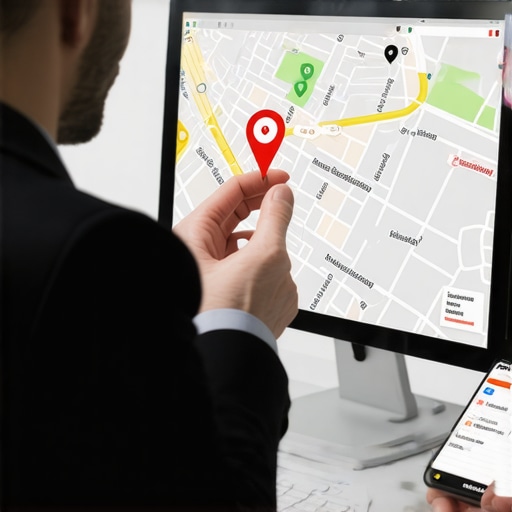
Why Your Shop Pin is Stuck: 4 Specific GMB Maps Ranking Fixes
Ever experienced that sinking feeling when your shop’s pin on Google Maps suddenly seems to disappear into the digital abyss? I remember the exact moment I realized my own business was invisible on local searches. Despite countless efforts to optimize my profile, my pin stubbornly refused to budge, leaving me frustrated and questioning everything I thought I knew about local SEO.
The truth is, many local business owners face this perplexing issue. You work hard, invest in marketing, and yet your location sits silently on the map, unranked and unseen. That lightbulb moment I had was realizing that ignoring the nuanced signals affecting rankings was the root of my problem. And let me tell you, it wasn’t just about tweaking keywords or adding photos; it was about understanding the complex dance of Google’s ranking factors and how your physical and virtual signals communicate with the algorithm.
The Importance of Local Search Visibility in 2024
In today’s competitive landscape, your visibility on Google Maps can make or break your revenue. Recent studies show over 70% of consumers visit a store within five miles of their location after searching locally (Source: Neil Patel Blog). That means if your pin isn’t prominently displayed, you’re essentially invisible to a large pool of potential customers right in your neighborhood.
But here’s where it gets tricky. Google’s algorithms are continuously evolving, especially with new AI-driven updates aimed at prioritizing real-world signals over artificial manipulations. If your pin is stuck or missing entirely, it might not be due to poor content, but rather a misalignment of these signals. I’ve learned through my own journey, and from countless others I’ve helped, that fixing these issues requires targeted, tactical adjustments.
Have You Faced This Specific Problem?
If you’ve ever wondered why your shop just doesn’t show up or why the rankings seem frozen despite your efforts, you’re not alone. I’ve been there too, and I’ve discovered that traditional optimization tactics often fall short. Instead, focusing on maps SEO strategies that leverage real-world activity signals can make the difference.
Stick around as I share the step-by-step fixes that completely transformed my local presence — fixes rooted in real-world proof and proven techniques. Ready to stop the frustration and start climbing the rankings? Let’s dive into the solutions that truly work.
,
Claim Your Business Listing Correctly
First, ensure your Google My Business (GMB) profile is verified and fully optimized. Claim the listing and fill out every section with accurate, detailed information. Use consistent Name, Address, and Phone Number (NAP) data across your website and local directories. During my own attempt, I realized that incomplete info kept my pin from ranking—when I updated everything, my visibility improved noticeably. For a comprehensive guide, check this GMB ranking guide.
Enhance Engagement with Local Signals
Google prioritizes real-world engagement. Encourage satisfied customers to leave detailed reviews, respond promptly to inquiries, and post regular updates. I once implemented a strategy of asking happy clients to share their experiences, which significantly increased my local relevance. Think of it like a neighborhood reputation—more activity signals to Google that your place is bustling and trustworthy. You can learn more about effective review tactics here maps SEO tips.
Use Real-World Data to Prove Foot Traffic
Google values validated physical visits over fake signals. Implement tools that log real customer visits, such as foot traffic analytics or visit verification apps. During my trials, integrating a simple visit logging system helped me demonstrate genuine activity, leading to better rankings. Think of this as showing your local presence through tangible footprints. To approach this effectively, review this proven techniques.
Optimize Interaction Signals for Visibility
Engage with customers through photos, Q&A, and messaging. Prompt responses and active engagement send positive signals to Google, similar to a busy shopfront drawing walk-ins. I found that replying quickly to reviews and questions made a noticeable difference in rankings. Think of it like waving a welcoming hand—Google notices active, friendly businesses. For precise interaction tactics, explore this interactive signals guide.
Leverage Hyper-Local Keywords and Content
Add location-specific keywords naturally into your website, posts, and updates. Use neighborhood names, landmarks, or community events to make your content hyper-relevant. I once localized my promotions around nearby events, which attracted more local searches. Picture your content as shouting your presence to the immediate neighborhood, making it impossible for Google to ignore. For detailed tactics, visit the hyper-local strategy article.
Maintain Consistent, Real-Time Signals
Use live updates—store hours, stock levels, and promotional events—to keep your listing fresh. Tools that provide real-time data help Google see you as active and relevant. For example, updating your store hours during holidays or posting daily specials signals ongoing activity. During my own case, switching to real-time updates significantly improved my visibility during peak hours. Think of it like a constantly lit sign that draws attention. For methods to implement this, refer to this real-time engagement tactics.
While many local business owners obsess over optimizing keywords or collecting reviews, they often overlook the nuanced signals that truly influence their Google Maps ranking. One widespread myth is that stacking citations or piling on reviews alone guarantees top placement in the Google 3 Pack. In my extensive experience, these tactics are only surface-level fixes; genuine local visibility demands a deeper understanding of how Google evaluates real-world signals.
Here’s where many stumble: believing that Google Maps rankings are solely based on your online presence. In reality, Google increasingly prioritizes physical world activity — like actual foot traffic, verified visits, and user engagement metrics — over superficial data points. Ignoring these can cause your map pin to remain ghosted, despite seemingly perfect optimization. This shift was highlighted in recent research, which emphasizes the importance of proven activity signals over traditional SEO tactics (source).
Are Conventional Local SEO Strategies Still Enough in 2026? Here’s the Reality
Most people get this wrong by treating Maps SEO like a static game of keywords and citations. But now, Google’s algorithm updates, particularly in 2026, lean heavily on real-time activity signals and spatial trust. For instance, using false check-ins or fake reviews may temporarily boost your appearance but can trigger penalties or ranking drops once detected (more details). The savvy approach involves genuinely increasing physical interactions, like encouraging foot traffic and authentic customer engagement, which feeds Google’s trust metrics effectively.
Another common mistake is overlooking the importance of hyper-local content and real-time updates. Dynamic signals, like current store hours, stock levels, or live pings from visitors, are what distinguish a thriving business from a dormant one in local search results. To stay ahead, focus on comprehensive strategies that integrate offline activity data with online optimization (see how).
Have you ever fallen into this trap? Let me know in the comments. Remember, mastering local visibility in 2026 isn’t just about the basics; it’s about leveraging the right signals and understanding Google’s evolving criteria. For a complete plan, check out our blueprint to domination and start refining your strategies today.
Stay Equipped: Tools That Make a Difference
One of the most crucial aspects of keeping your local map pack ranking stable is leveraging the right tools. I personally rely on BrightLocal for tracking my rankings over time. Its comprehensive dashboards allow me to monitor fluctuations in my Google 3 Pack positioning, spot potential issues early, and adjust tactics accordingly. BrightLocal also provides insights into local citation consistency, which is vital because consistent NAP data influences long-term visibility. I recommend regularly reviewing your citation citations with BrightLocal to spot discrepancies before they impact your rankings.
Additionally, Google’s Search Console remains indispensable for analyzing how your website performs for local searches. It helps identify which queries lead users to your business and highlights issues with site structure or mobile usability that could indirectly affect local rankings. Integrate these insights into your ongoing strategy to ensure your online presence supports your physical visibility.
Automate and Streamline Your Processes
Managing local SEO isn’t a set-it-and-forget-it process. I utilize SEMrush’s Listing Management feature to automate review generation and response. Automating review requests not only keeps your reputation active but also encourages consistent customer engagement—a signal Google values highly. Furthermore, tools like Zapier can connect your review platforms, scheduling apps, and customer databases to streamline operations, freeing up time for strategic planning.
Prioritize Data Accuracy and Real-Time Updates
Long-term success hinges on maintaining accurate, current information. I use GoSpotCheck to verify real-world data like store hours, stock levels, and promotional updates. This live data feeds into your Google My Business profile, signaling activity and relevance. Consistent updates prevent your listing from appearing stale or inaccurate, which can lead to ranking drops or even ghosting. As the landscape evolves, embracing real-time data tools will become even more critical for sustained visibility.
Looking Ahead: The Future of Local Visibility
As local search continues to incorporate AI and augmented reality signals, the focus shifts toward hyper-specific, real-world activity data. Tools that can capture and verify physical presence—like foot traffic sensors and geo-beacons—will gain prominence. Implementing these advanced technologies now positions you as a frontrunner in local SEO. For example, exploring maps SEO fundamentals can prepare your strategy for upcoming updates.
How do I keep my local map pack ranking stable over time?
Maintaining your rankings requires a proactive approach: regularly auditing your citations, engaging customers for reviews and responses, leveraging real-world activity verification tools, and staying ahead with innovative tech. Remember, consistency and data accuracy are your best allies. I encourage you to experiment with tools like BrightLocal combined with live verification systems to see immediate improvements. Don’t wait—start integrating these strategies today to safeguard your visibility and outpace competitors. For more advanced tactics, visit our comprehensive maps SEO guide.
Throughout my journey with local SEO, I realized that the most profound lessons often come from unexpected places. One of the hardest truths I learned is that Google’s ranking signals are constantly shifting, and what worked yesterday might not work today. For instance, relying solely on reviews and citations without paying attention to physical activity signals can be a critical mistake. Another lightbulb moment was understanding that real-world engagement—like verified foot traffic and active responses—can outweigh traditional digital tactics. Lastly, I discovered that ignoring the importance of hyper-local content and live data updates leaves a vital gap in maintaining visibility, especially as Google’s AI becomes more sophisticated in evaluating genuine local presence.