
How to Reverse the Damage of a Messy NAP History on Maps
How to Reverse the Damage of a Messy NAP History on Maps
In the world of local search, your business’s identity is distilled into three critical components: Name, Address, and Phone Number – commonly referred to as NAP. While these details seem straightforward, they represent the foundational pillars of algorithmic trust. When your NAP data is consistent across the web, Google views your business as a legitimate, reliable entity. However, when that data becomes fragmented, outdated, or contradictory, you enter the territory of a “messy” NAP history. This is the silent killer of local rankings. As Brandon Leuangpaseuth has noted, NAP errors can silently tank your rankings by eroding the confidence Google’s algorithm has in your location data. If the world’s largest search engine cannot verify exactly who you are or where you are located, it will hedge its bets by ranking a competitor with a cleaner data profile instead of your business. To understand how to fix this, we must first understand Why Your Phone Number on Third-Party Sites is Actually Tanking Your Map Rank.
The Anatomy of a Messy NAP History: How Did We Get Here?
A messy NAP history rarely happens overnight. It is usually the result of years of business evolution that hasn’t been properly documented in the digital ecosystem. One of the most common catalysts is a physical move. When a business relocates, the old address doesn’t simply vanish; it lingers in the databases of obscure directories and scrapers. Similarly, rebranding – changing “Smith & Sons Plumbing” to “Smith Plumbing Professionals” – creates a split identity that confuses search crawlers.
Perhaps the most insidious cause is the “tracking number trap.” Many businesses, in an attempt to measure the ROI of different marketing campaigns, use unique phone numbers for various advertisements. If these tracking numbers find their way into the citation ecosystem – often through automated scrapers – you end up with dozens of versions of your business profile, each with a different phone number. This leads to local seo errors that are difficult to track manually. Furthermore, automated scrapers are constantly pulling data from one directory to populate another. If one high-level directory has an error, that error is replicated exponentially across the web, leaving business owners wondering, “why is my google business profile not ranking?” even after they’ve optimized their primary listing. This technical decay creates a “ghost” of your business’s past that haunts your current SEO efforts.
Why Google Penalizes Inconsistent Data (The Trust Factor)
To understand why inconsistency is so damaging, we have to look at the “Proximity, Relevance, and Prominence” framework that governs the local algorithm. Google’s primary goal is to provide users with the most accurate information possible. If a user drives to an address provided by Google and finds an empty lot because the business moved two years ago, the user loses trust in Google. To prevent this, Google uses third-party data from across the web to “verify” the information on your Google Business Profile (GBP).
When you invest in google business profile seo, you are essentially trying to build a case for your business’s legitimacy. If Google finds your name at one address on Yelp, a different phone number on YellowPages, and an old business name on a local chamber of commerce site, it experiences a “trust gap.” The algorithm cannot be 100% certain which piece of data is correct. In the face of uncertainty, Google reduces your “Prominence” score. This is why a business with fewer reviews but perfect NAP consistency can often outrank a more established business with a fractured data history. You can learn more about this hierarchy in our guide on How the Local SEO Algorithm Decides Which Business Gets the Top Spot Today. Without a unified data front, your visibility will always be capped by the algorithm’s lack of confidence.
The NAP Audit: Finding the “Ghost” Listings
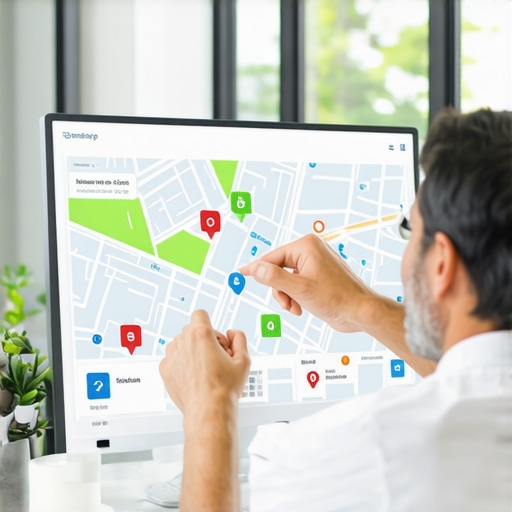
The first step in recovery is a comprehensive audit. You cannot fix what you haven’t found. This process involves playing detective to find every “ghost” listing – those old, incorrect, or duplicate profiles scattered across the web. Start by performing manual searches using “Search Strings.” Search for your old business names, old phone numbers, and previous addresses in quotes. For example, searching for "555-0123" + "Your Business Name" might reveal a five-year-old listing on a niche directory you forgot existed.
While manual searching is thorough, it is time-consuming. Utilizing a google maps rank tracker and other local seo tools can help identify where your business is mentioned and where discrepancies exist. A professional google business profile audit tool will scan major aggregators and tier-1 directories to highlight mismatches in real-time. The goal of this audit is to create a master spreadsheet of every incorrect URL you find. This list becomes your hit list for the cleanup phase. Understanding the depth of these errors is crucial; as we discuss in What an Actual Google Maps Audit Reveals About Your Hidden Ranking Errors, the most damaging errors are often the ones buried on page five of a search result that you didn’t even know existed.
The Cleanup Blueprint: A Step-by-Step Recovery Strategy
Once you have identified the damage, it is time to execute the cleanup. This is a tiered process that moves from the most influential data sources down to the niche directories.
- Step 1: Fix the Core. Your website’s footer and your Google Business Profile must be the “Source of Truth.” Ensure they match character-for-character. If your GBP says “Suite 100” and your website says “Ste 100,” choose one and stick to it.
- Step 2: The Aggregator Level. This is the most critical technical step. Data aggregators like Data Axle and Foursquare feed their data to hundreds of smaller sites. If you fix the data here, it will eventually “trickle down” to the rest of the web.
- Step 3: Tier 1 Directories. Manually claim and verify your profiles on high-authority sites: Yelp, Bing Places, Apple Maps, and Facebook. These sites carry significant weight in Google’s trust calculations. Using google maps optimization strategies on these platforms reinforces your GBP’s authority.
- Step 4: Niche & Local Citations. Focus on industry-specific sites. For a lawyer, this means Avvo or FindLaw; for a contractor, it’s Houzz or HomeAdvisor. These are high-relevance signals that Google prizes.
In 2025 and 2026, the industry consensus – as highlighted by Medium/HalluGuard – is that human-verified audits are superior to pure AI-driven cleanup tools. AI often misses nuances in business names or fails to navigate complex “claim your listing” phone verification hurdles. A manual, strategic approach is often The Citation Cleanup Move That Actually Moves the Needle for Local Rank because it ensures that duplicates are merged rather than just ignored.
Dealing with Persistent Duplicates and “Unclaimed” Profiles
One of the most frustrating aspects of reversing NAP damage is the “zombie” listing – a duplicate profile that keeps reappearing or remains unclaimed. Duplicate listings are dangerous because they split your “ranking juice.” Instead of all your reviews and citations pointing to one profile, they are divided between two or three, making each individual profile weaker.
To handle these, you must be persistent. On platforms like Yelp or Bing, use the “Claim this business” feature. Once you have control, you can request a merge with your primary profile. If a listing is on a site that doesn’t allow claiming, use the “Suggest an edit” or “Report a problem” feature. State clearly that the listing is a duplicate of your verified profile. This is a core component of professional google business profile management. If the task becomes overwhelming, a citation cleanup service can handle the heavy lifting of contacting webmasters and navigating the verification loops of hundreds of different sites. The goal is a “clean” ecosystem where only one version of your business exists.
Monitoring Your Recovery: Tools and Timelines
Reversing NAP damage is not an instant fix. It is a slow process of rebuilding algorithmic trust. Generally, it takes 3 to 6 months for Google to recrawl the corrected citations and update its confidence score for your business. During this period, you may see fluctuations in your rankings as the “old” data is purged and the “new” data is indexed.
To track your progress, you should use local seo software to monitor your citations and your Map Pack position. A google maps ranking service can provide heatmaps that show how your visibility is expanding geographically as your NAP consistency improves. Don’t be discouraged if you don’t see a jump in the first week. You are essentially performing digital surgery on your business’s reputation. For a deeper dive into tracking these nuances, see our article on How to Measure Local Search Results Without Relying on Vanity Metrics. Consistency over time is the metric that matters most to Google.
Conclusion: Turning Consistency Into a Competitive Advantage
A clean NAP history is the foundation upon which all other local SEO efforts are built. Without it, your reviews, photos, and posts are working twice as hard for half the results. By auditing your “ghost” listings, cleaning up the data aggregators, and merging persistent duplicates, you remove the friction that prevents Google from ranking you. Once your NAP is solidified, you can move from a defensive posture to an offensive one, focusing on interaction signals and content that truly rank google business profile at the top of the Map Pack.
Don’t let a move from three years ago or a poorly planned tracking number campaign hold your business back any longer. Perform a manual audit of your citations today to see where you stand. If you find your business’s digital history is more tangled than you can handle, consider hiring a professional google maps seo service to restore your data integrity and reclaim your spot at the top of the search results.