
How to Stop Your Business From Falling Off the Map When Competitors Run Ads
How to Stop Your Business From Falling Off the Map When Competitors Run Ads
The local search landscape of 2026 is no longer a friendly neighborhood directory; it is a high-stakes digital battlefield. If you have noticed your leads drying up or your pins disappearing, you are likely a victim of the “Ad Invasion.” For years, local business owners relied on basic google business profile seo to secure a spot in the coveted 3-Pack. But today, the top of the search results page is increasingly crowded by Local Services Ads (LSAs), Promoted Pins, and aggressive PPC campaigns that push organic results further down the screen. If you are still “setting and forgetting” your profile, you aren’t just standing still – you are moving backward.
The reality is that passive local SEO is dead. A recent Search Engine Land analysis of 8.7 million Google Business Profiles revealed a startling trend: visibility is no longer dictated by who has the most citations, but by “signal-fit.” This concept suggests that Google’s algorithm has evolved to prioritize businesses that demonstrate real-time relevance and active user engagement over those with static, legacy optimizations. To stay relevant, you need to stop focusing on outdated checklists and start mastering the signals that Google actually cares about. You can’t just hope to be seen; you have to engineer your presence so that Google has no choice but to rank you, even when your competitors are spending thousands on ads. To get started on your weekly maintenance, check out The 5-Minute Monday Checklist to Keep Your Business in the Google 3-Pack.
Beyond Proximity: Why “Signal-Fit” Brands Win
For a long time, proximity was the undisputed king of local search. If you were the closest plumber to the user, you won the click. However, the March 2026 Google Webmaster Report highlighted significant updates regarding “local serving bugs” and algorithmic shifts that have fundamentally weakened the proximity factor. Google has realized that being the closest doesn’t necessarily mean being the best. Today, the algorithm balances Proximity, Relevance, and Prominence, but the weight has shifted heavily toward the latter two. This is why you often see a business three miles away outranking the shop right across the street.
This shift is what I call the “Signal-Fit” era. In a world where competitors can buy their way to the top with a google maps ranking service, organic winners are those that provide the most consistent “interaction signals.” Google is looking for proof of life. Are people actually visiting your store? Are they interacting with your profile? If your business only appears to people standing in your own parking lot, you have fallen into what we call The Proximity Trap: Why Your Business Only Ranks for People in Your Own Parking Lot. To break out of this radius, your profile must demonstrate high relevance across a broader geographic area through localized content and user-driven data points that prove your prominence in the community.
Winning in 2026 requires a shift from “SEO as a task” to “SEO as an activity.” You need to understand that every time a user interacts with your brand online, they are sending a signal to Google. If your competitors are running ads, they are essentially paying for these interactions. To beat them organically, you must generate these signals naturally by being more relevant to the user’s specific intent than the paid ad could ever be.
The “Invisible” Ranking Factors: Interaction Signals
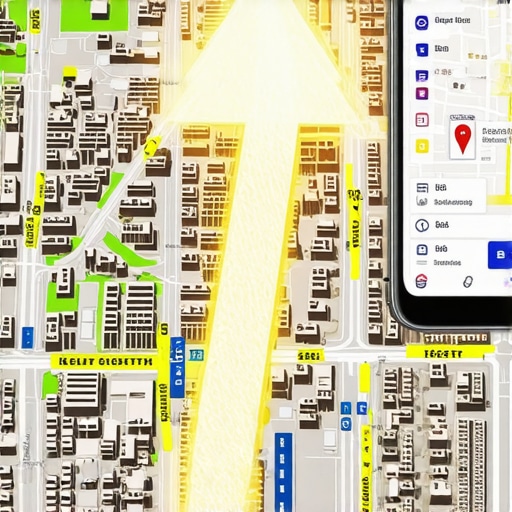
If you want to dominate the Map Pack without a massive ad budget, you have to master the “invisible” ranking factors. These aren’t things you can type into a dashboard; they are behaviors performed by your customers that Google tracks via mobile device data. One of the most powerful signals in the current algorithm is the “Driving Direction Request.” When a user clicks “Directions” on your profile, it is a high-intent signal that tells Google your business is a destination worth visiting. We’ve analyzed the data, and the correlation is undeniable – see The Hidden Impact of Driving Direction Requests on Local Search Rank for the full breakdown.
Beyond directions, Google monitors “dwell time” and “store pings.” Using anonymous location data from Android and iOS devices, Google can verify if a business is actually busy. If your profile claims you are open and popular, but Google sees zero physical foot traffic (pings) at your coordinates, your ranking will eventually tank. This is how Google identifies “ghost kitchens” or lead-gen spam sites that don’t have a real physical presence. To stay ahead of these technical requirements, many professionals utilize advanced local seo tools to monitor how these signals are trending compared to their local competition.
Interaction signals also include things like “click-to-call” frequency and how long a user stays on your Google Business Profile looking at photos or reading updates. Every second a user spends on your profile is a vote of confidence in your relevance. If users bounce off your profile quickly to click on a competitor’s ad, Google notes that your profile didn’t satisfy the search intent. You must treat your GBP as a mini-website, designed to capture and hold attention through high-value information and engaging visuals.
Strategic Optimization: Fixing the “Silent Killers”
Many businesses are unknowingly sabotaging their own rankings through what I call “silent killers.” These are small errors in google business profile seo that have outsized negative impacts. The most common offender is the misuse of secondary categories. While it’s tempting to select every category that even remotely relates to your business, this often dilutes your primary relevance signal. Choosing the wrong secondary category can confuse the algorithm and lead to your business being filtered out of relevant searches. I’ve seen this happen countless times, which is why I wrote about how Selecting the Wrong Secondary Business Category is Killing Your Map Clicks.
Another silent killer is the lack of high-resolution, original photography. In 2026, Google’s Vision AI is incredibly sophisticated. It can “read” your photos to identify what your business actually does. If you are uploading stock photos or low-quality, blurry images, you are missing a massive opportunity to build relevance. Furthermore, response times are now a direct ranking factor. If a customer messages you through the GBP interface and you take six hours to respond, Google will deprioritize your profile in favor of a competitor who responds in minutes. Speed is a signal of quality and reliability.
To ensure your profile is fully optimized and free of these technical hurdles, you should consider a professional google business profile optimization. This isn’t just about filling out fields; it’s about aligning every technical aspect of your profile with the specific “signal-fit” requirements of your industry. Don’t let a simple settings error be the reason a competitor’s ad outshines your organic listing.
The Modern Review Strategy (It’s Not Just 5 Stars)
Most business owners think that getting more 5-star reviews is the end-all-be-all of local SEO. They are wrong. In the current landscape, the *content* of the review is often more important than the rating itself. Google’s NLP (Natural Language Processing) scans reviews for specific keywords related to your services. A review that says “Great job!” is worth significantly less than one that says, “The team did an amazing job with my emergency water heater repair in Austin; they were professional and fast.”
Furthermore, reviews containing photos are weighted much more heavily. A photo taken by a customer at your place of business serves as “physical evidence” that the interaction actually occurred. However, a word of caution: blurry or irrelevant customer photos can actually hurt your rank if Google’s AI can’t determine what they are. You need to guide your customers to leave high-quality feedback. I recommend using a specific approach, like The Text Template That Gets Clients to Leave Photos in Their Reviews, to ensure you are getting the kind of user-generated content that moves the needle.
Remember, Google is looking for authenticity. A sudden influx of 50 generic reviews will likely trigger a spam filter or a suspension, especially following the March 2026 updates aimed at cleaning up local search. Aim for a steady “velocity” of high-quality, descriptive reviews that include photos and mention your specific services by name. This builds a moat of “social proof” that no amount of ad spend can easily replicate.
Local Authority & “Neighbor-to-Neighbor” Backlinks
Traditional SEO focuses on “Domain Authority” and getting links from high-traffic global websites. For the Map Pack, that strategy is largely a waste of time and money. Google doesn’t care if a tech blog in another country links to your local bakery. What it cares about are “Local Signals.” To rank google business profile effectively, you need links from entities that are geographically relevant to you.
I advocate for “Neighbor-to-Neighbor” backlinks. This means getting featured on the website of a local charity you support, a neighborhood news blog, or even a local sports team’s sponsor page. These links tell Google that you are a pillar of your specific community. Stop wasting your budget on generic link packages that promise “DA 50+ links.” Instead, focus on building local authority. If you are still buying those generic packages, you need to read why you should Stop Buying Generic Backlinks and Start Building Local Signals That Actually Drive Calls. In fact, there are only 7 Citations That Actually Move Your Rank; everything else is often just noise that provides zero ROI.
Local authority is also built through “unlinked mentions.” If the local newspaper mentions your business name and address in an article about a community event, Google’s algorithm is smart enough to associate that mention with your profile, even without a direct hyperlink. This is the essence of prominence – being a recognized name in your local area.
To track how your authority is growing and how it impacts your position on the map, using a dedicated rank google business profile service can help you identify which local mentions are actually contributing to your visibility and which are being ignored by the algorithm.
Future-Proofing for 2026: AR and Physical Evidence
Looking ahead, the integration of Augmented Reality (AR) into Google Maps is changing the game again. Google is starting to use “Live View” data to help users navigate, which means it is constantly scanning the physical world. For business owners, this means that “physical evidence” is becoming a primary ranking signal. Does your storefront match the photos on your profile? Is your signage clearly visible to Google’s Street View cars and users’ smartphone cameras?
Businesses that fail to provide clear physical evidence of their existence are seeing an increase in “ghosting” or sudden profile suspensions. This is a major part of the Local SEO Trends 2026 and the Shift Toward Physical Proximity Signals. To future-proof your business, you should be uploading 360-degree photos and ensuring your “Storefront” attributes are accurately mapped. Google wants to provide a seamless transition from the digital search to the physical visit.
As AI becomes more integrated into the search experience, the businesses that provide the most structured and verified data will win. This includes maintaining an active “Products” and “Services” menu within your GBP. If you aren’t using google maps seo tools to audit these features regularly, you are leaving your visibility to chance. The future of local search is immersive, and your profile needs to be ready to meet users in that AR-driven environment.
Conclusion & Call to Action
Beating competitors who run ads isn’t about outspending them; it’s about out-smarting them. By focusing on “signal-fit,” mastering interaction signals, and building genuine local authority, you can maintain a dominant organic presence in the Map Pack. Organic dominance is the only way to achieve sustainable, long-term ROI in an era of rising ad costs. Don’t wait until you’ve fallen off the map to take action. You need to know exactly where you stand today. Find out what’s really going on under the hood by reading What an Actual Google Maps Audit Reveals About Your Hidden Ranking Errors. The map is changing – make sure your business is the one leading the way.
![Does Fast Interaction Still Fix GMB Maps Ranking? [2026 Test]](https://localmappackseoservice.com/wp-content/uploads/2026/04/Does-Fast-Interaction-Still-Fix-GMB-Maps-Ranking-2026-Test.jpeg)